

Perforated Metal Sheets
Perforated metal offers unparalleled versatility with its combination of strength, functionality, and visual appeal. By understanding the different materials, standards, hole options, sizes, and thicknesses, you can select the perfect perforated metal solution for your specific project needs.

Description
Perforated metal is a sheet metal product with a variety of strategically placed holes, offering a unique combination of functionality and aesthetics. Used across countless applications, it provides:
- Strength and Durability: The base metal retains its inherent strength, while the perforations allow for weight reduction and improved airflow.
- Versatility: Available in various materials, hole patterns, and sizes, perforated metal caters to diverse needs.
- Visual Appeal: The perforations can create decorative patterns, enhancing the visual impact of the material.
Perforated metal offers unparalleled versatility with its combination of strength, functionality, and visual appeal. By understanding the different materials, standards, hole options, sizes, and thicknesses, you can select the perfect perforated metal solution for your specific project needs.
Materials Used in Perforated Metal:
Perforated metal sheets can be manufactured from a wide range of materials, each with specific properties:
- Carbon Steel: The most widely used option due to its affordability, good formability, and strength.
- Stainless Steel: Offers superior corrosion resistance, making it ideal for outdoor applications, food processing equipment, and architectural elements.
- Aluminum: Lightweight and corrosion-resistant, suitable for applications requiring weight reduction or exposure to the elements.
- Galvanized Steel: Provides a good balance of affordability and corrosion resistance compared to uncoated carbon steel.
Perforation grades often refer to the thickness of the base metal used. Common options include:
- Light Gauge: Thin metal sheets, typically used for decorative applications or filtering light air or sound.
- Medium Gauge: Offers a balance between weight and strength, suitable for various functional and aesthetic applications.
- Heavy Gauge: Thick metal sheets with exceptional strength, ideal for heavy-duty applications like security enclosures or filtering larger particles.
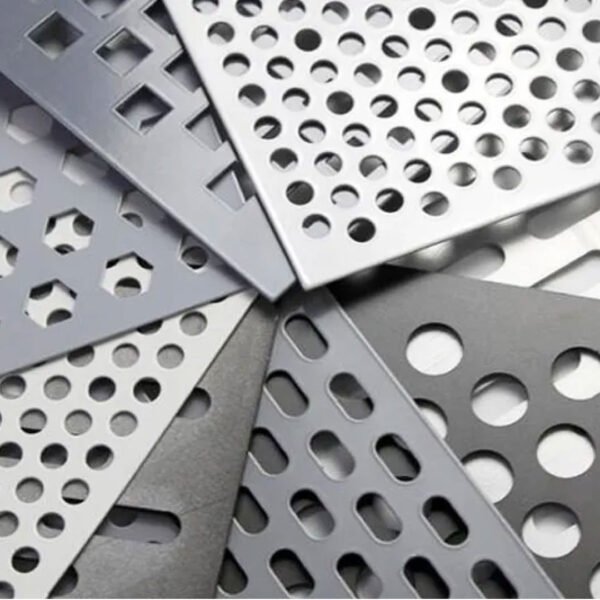
Perforated metal is sheet metal that has been punched or stamped with a pattern of holes. This process creates a versatile material used for various applications, including: Air and fluid filtration, Noise control, Light filtering and decorative elements, Safety and security barriers, Drainage and ventilation
Open Area: An important factor for perforated metal is the open area percentage, which refers to the amount of open space compared to the total sheet area. This percentage influences factors like airflow, light transmission, and material weight.
Hole Patterns: Perforated metal comes in various hole patterns, including: Round, Square, Rectangular, Hexagonal, Decorative patterns
Sheet Thickness and Hole Sizes:
Perforated metal sheets are available in a range of thicknesses, typically from 0.030 inch (approximately 0.76 mm) to 0.250 inch (approximately 6.35 mm). Hole sizes vary depending on the chosen pattern and sheet thickness.
Materials
-
Perforated metal sheets can be manufactured from a wide range of materials, each with specific properties:
- Carbon Steel: The most widely used option due to its affordability, good formability, and strength.
- Stainless Steel: Offers superior corrosion resistance, making it ideal for outdoor applications, food processing equipment, and architectural elements.
- Aluminum: Lightweight and corrosion-resistant, suitable for applications requiring weight reduction or exposure to the elements.
- Galvanized Steel: Provides a good balance of affordability and corrosion resistance compared to uncoated carbon steel.
Additional Information
- Hole Size: Diameter or width of the individual perforations.
- Hole Pattern: The arrangement of holes, including common options like round, square, hexagonal, or decorative shapes.
- Open Area Percentage: The amount of open space compared to the total sheet area, impacting factors like airflow, light filtration, and weight.
- Sheet Sizes: Perforated metal sheets come in standard sizes or can be custom-fabricated to specific dimensions.
- Thickness: Varies depending on the material and application, typically ranging from thin gauges for decorative purposes to heavy gauges for structural applications.
There are no question found.
Related products



Rating & Review
There are no reviews yet.