

Structural Steel
Structural steel remains a cornerstone material in modern construction, offering a unique combination of strength, versatility, and cost-effectiveness. Its extensive applications and numerous advantages make it a reliable choice for building safe, durable, and sustainable structures across various industries.

Description
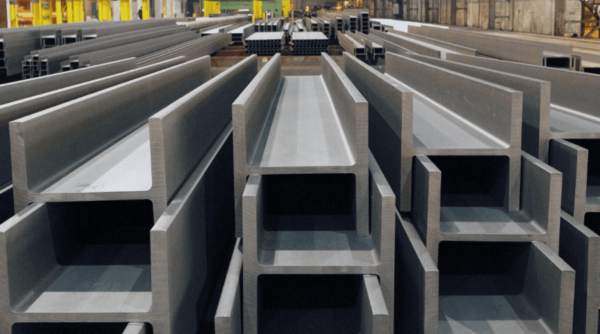
Structural steel shapes are hot-rolled steel profiles with specific cross-sections designed for load-bearing applications in buildings and bridges. Common shapes include:
- I-Beams (H-Beams): Have a capital “I” or “H” shaped cross-section, providing high strength and bending resistance for beams and columns.
- Channels: U-shaped sections commonly used for beams, lintels, and purlins.
- Angles: L-shaped sections used for braces, columns, and supporting elements.
- Tees: T-shaped sections often used for columns, lintels, and web stiffeners.
- Pipes and Tubes: Hollow sections used for columns, handrails, and conduits (although some consider pipes and tubes separate categories from structural shapes).
Sizes (Thickness):
Structural steel shapes come in various sizes designated by their web height (for I-beams and channels) or leg lengths (for angles and tees). The thickness of the flanges and web (or legs) varies depending on the specific shape, size, and ASTM standard.
Here are some examples:
- I-Beams: Web heights can range from 3 inches (approximately 76.2 mm) to 36 inches (approximately 914.4 mm) with flange and web thicknesses varying based on the specific I-beam designation (e.g., W8x20, W12x45).
- Channels: Web heights can range from 2 inches (approximately 50.8 mm) to 15 inches (approximately 381 mm) with flange and web thicknesses varying based on the specific channel designation (e.g., C4x10.5, C12x25).
Applications of Structural Steel:
Structural steel plays a vital role in a multitude of construction applications, including:
- Buildings: Used extensively in beams, columns, trusses, and other structural elements for high-rise buildings, commercial structures, and residential developments.
- Bridges: The primary material for bridge girders, trusses, and support systems, enabling the construction of robust and long-lasting bridges.
- Industrial Facilities: Employed in warehouses, factories, power plants, and other industrial structures due to its strength and ability to create large, open spaces.
- Infrastructure Projects: Essential for constructing transportation infrastructure like airports, stadiums, and railway stations.
Structural Steel Grades and Standards:
Structural steel is manufactured and classified according to various standards, ensuring consistent quality and performance. Some prominent standards include:
- ASTM A36 (USA): A widely used standard for general construction applications, categorized by yield strength (e.g., Gr. 36).
- ASTM A570 (USA): Offers higher yield strength options compared to A36, suitable for specific applications.
- EN 10025 (Europe): A common standard in Europe for structural steel plates, categorized by minimum yield strength (e.g., S235).
- JIS G3131 (Japan): A widely used standard for mild steel plates in Japan, using a similar designation system based on yield strength (e.g., SM400)
Choosing the appropriate grade of structural steel depends on the specific project requirements, load-bearing needs, and desired properties. Consulting with a structural engineer is recommended for critical applications.
Structural steel remains a cornerstone material in modern construction, offering a unique combination of strength, versatility, and cost-effectiveness. Its extensive applications and numerous advantages make it a reliable choice for building safe, durable, and sustainable structures across various industries.
Features & Benefits
- Strength and Reliability: Provides exceptional structural support and can withstand significant weight loads, ensuring the stability and longevity of buildings and bridges.
- Design Flexibility: The wide range of shapes and sizes allows architects and engineers to create versatile and innovative designs that cater to specific project requirements.
- Fast and Efficient Construction: Structural steel components can be prefabricated off-site, enabling faster on-site assembly and reducing overall construction time.
- Sustainability: Steel is a highly recyclable material, and modern steel production processes are becoming increasingly environmentally conscious.
- Fire Resistance: Structural steel can be protected with fireproofing materials, enhancing the overall fire resistance of a building.
Additional Information
| Shape | Key Dimensions (Description) | Typical Thickness Range (mm) |
|---|---|---|
| Beam (Wide Flange) | Height (H) x Width (B) x Flange Thickness (t) | 8 - 610 |
| Beam (I-Beam) | Depth (D) x Width (B) x Flange Thickness (t) | 8 - 610 |
| Channel | Height (H) x Web Thickness (tw) x Flange Width (bf) | 5 - 30 |
| Angle | Leg Length (a) x Leg Length (b) x Thickness (t) | 3 - 25 |
| Tee | Flange Width (b) x Flange Thickness (t) x Web Thickness (tw) | 5 - 30 |
| Hollow Structural Section (Square) | Side Length (a) x Wall Thickness (t) | 2 - 20 |
| Hollow Structural Section (Rectangular) | Width (B) x Height (H) x Wall Thickness (t) | 2 x 3 - 610 x 406 x 25 |
There are no question found.
Related products



Rating & Review
There are no reviews yet.